If a collector is calling you ten times a day, threatening arrest, or hinting they will tell your boss, here is the first thing you need to know: federal law puts hard limits on what they are allowed to do, and a great deal of that behavior is illegal. The Fair Debt Collection Practices Act (FDCPA) is the federal law that governs third-party debt collection, and the Consumer Financial Protection Bureau (CFPB) enforces it.
So take a breath. You are not powerless, and you do not have to figure this out from memory in the middle of a stressful phone call. Let me walk you through exactly what a collector cannot do, what they are required to tell you, and the two concrete moves you can make to push back, every one of it anchored to the CFPB.
First, the law on your side
The FDCPA covers debts taken on "primarily for personal, family, or household purposes," such as credit cards, medical bills, and personal loans, according to the CFPB. In 2021 the CFPB modernized it with a rule called Regulation F, which took effect November 30, 2021. Regulation F is important because it added specific, quotable limits that many older "know your rights" articles predate, including a cap on call frequency and rules for email, text, and social media. The CFPB's debt collection resource center is the plain-language home base for all of it.
One distinction to keep in mind throughout: the FDCPA primarily governs third-party collectors and debt buyers, the companies that collect on someone else's behalf or that bought the debt. Some protections work differently when the original creditor collects its own debt, though state laws and Regulation F may still apply. When in doubt, your state's rules may be stronger than the federal floor.
What a debt collector legally cannot do
The CFPB is clear about the conduct that crosses the line. Per the agency's guidance on what laws limit what collectors can say or do, a collector cannot:
- Call at odd hours. No calls before 8 a.m. or after 9 p.m. your local time, or at any time or place they know is inconvenient for you.
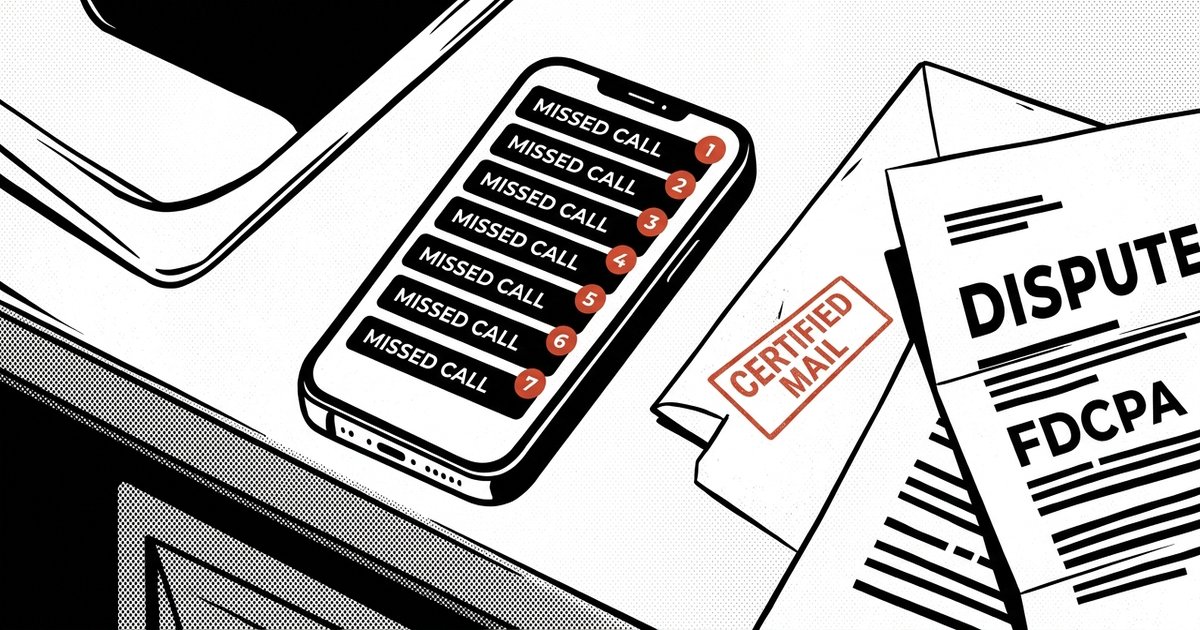
- Call you to the point of harassment. Under the CFPB's Debt Collection Rule, a collector is presumed to violate the law if it calls you about a particular debt more than seven times in a seven-day period, or within seven days after a phone conversation about that debt. This is the "7-in-7" rule.
- Contact you at work if they know, or have reason to know, that your employer prohibits such calls.
- Harass, threaten, or abuse you by phone, text, or email, including profanity, threats of violence, or repeated calls meant purely to annoy.
- Lie or mislead you. They cannot pose as an attorney or a government agency, misstate the amount you owe, or threaten arrest or actions they cannot legally take.
- Post about your debt publicly on social media. Private messages are allowed unless you opt out, but a public post about what you owe is off limits.
- Go around your attorney. If you are represented, the collector must generally contact your attorney instead of you.
A word on that 7-in-7 rule, because precision matters here. It is a presumption, not an absolute ceiling. Fewer than seven calls can still be a violation if they are harassing, and a collector could in theory defend more in unusual circumstances. So read it as "presumed to violate," not a hard line they are free to ride right up to.
What a debt collector must tell you
Collectors do not just face limits; they owe you information. A collector must give you a "validation notice" either in its first communication or within five days of first contacting you. That notice has to include the amount of the debt, the name of the creditor you owe, and how to dispute it.
This matters more than it sounds. A surprising share of collection contacts involve the wrong person, the wrong amount, or a debt that is not yours. The validation notice is your starting point for checking whether the debt is even real before you pay a cent.
Your move #1: make them prove it
Here is your single most powerful tool. If you dispute the debt in writing within 30 days of receiving the validation notice, the collector must stop collecting until it sends you written verification of the debt, according to the CFPB. Put another way, you can press pause and force them to back up their claim.
Keep it simple and in writing. A dispute letter does not need legal language; it needs to clearly state that you dispute the debt and are requesting verification. A few plain lines do the job:
I am writing to dispute the debt referenced in your notice dated [date], account number [number]. I request that you verify this debt, including the amount owed and the name of the original creditor, before any further collection activity. Until you provide written verification, please cease collection of this debt as required under the FDCPA.
Send it so you have proof it arrived. Certified mail with return receipt is worth the few dollars.
Your move #2: tell them to stop contacting you
You also have the right to tell a collector, in writing, to stop contacting you altogether. Once they receive that letter, the CFPB says they may only contact you to confirm they are stopping or to notify you of a specific action, such as filing a lawsuit. Again, certified mail with return receipt gives you a record.
A sample of the core line:
Under the Fair Debt Collection Practices Act, I am requesting that you cease all further communication with me regarding account number [number], except to confirm that you will stop contacting me or to notify me of a specific legal action.
Now the honest caveat, because this is exactly where people get a false sense of relief. A cease-communication letter stops the calls. It does not erase the debt, and it does not stop lawful collection if you actually owe the money. A collector can still sue, and silence on the phone does not make a valid debt disappear. Use this tool to stop harassment and buy room to think, not as a way to make a real obligation vanish.
If a collector breaks the rules
When a collector ignores these limits, you have places to report it, and those reports carry weight. File a complaint with the CFPB, report to the FTC, and contact your state attorney general's office. The CFPB publishes an annual FDCPA report that tracks industry conduct, which means complaints feed real oversight.
Document everything as you go: dates and times of calls, who you spoke with, what was said, and copies of any letters. A clear record turns a "he said, she said" into a credible complaint.
A quick note on what stopping contact does not do
To be unmistakably clear, because it protects you: none of these tools cancel a debt you legitimately owe. Disputing forces verification. A cease letter stops contact. Neither one is a magic eraser, and neither one stops a lawsuit if the debt is valid. If you are facing a lawsuit, a time-barred "zombie" debt, or a situation where you are unsure whether you even owe the money, that is the moment to get personalized help.
This article is general information, not legal advice. For your specific situation, contact a consumer-protection attorney or your local legal-aid office. If you are weighing how to handle the underlying balances, our guides on paying down credit card debt and choosing a payoff method can help, our budget calculator can map out what you can realistically put toward it, and you can start a request to explore options for consolidating what you owe. American Cash Relief is a lender-matching service, not a collector, lender, or law firm.
Frequently Asked Questions
Is it legal for a debt collector to call me ten times a day?
Almost certainly not. Under the CFPB's Debt Collection Rule, a collector is presumed to violate the law if it calls you about a particular debt more than seven times in a seven-day period. Even fewer calls can be a violation if they are harassing. Calls before 8 a.m. or after 9 p.m. your local time are also prohibited.
Can a debt collector threaten to have me arrested?
No. The FDCPA prohibits false or misleading threats, including threatening arrest or legal actions the collector cannot legally take. You cannot be jailed for owing a consumer debt like a credit card or medical bill, and a collector saying otherwise is breaking the law. Report it to the CFPB.
How do I make a debt collector stop calling me at work?
Tell them, ideally in writing, that your employer prohibits such calls. Once a collector knows or has reason to know your workplace does not allow them, the FDCPA bars them from contacting you there. You can also send a broader written cease-communication request to stop contact entirely.
What happens if I dispute the debt within 30 days?
If you dispute it in writing within 30 days of receiving the validation notice, the collector must stop collecting until it sends you written verification of the debt. This pauses collection and forces them to prove the debt is valid and the amount is correct before they can resume.
Does sending a cease-communication letter erase my debt?
No. It stops the collector from contacting you (except to confirm they are stopping or to notify you of a specific action like a lawsuit), but the debt remains valid if you owe it, and the collector can still sue. Stopping contact is not the same as resolving the debt.

Need cash before payday?
Pick your amount and get matched with lenders in our network. It's free, secure, and there's no obligation.